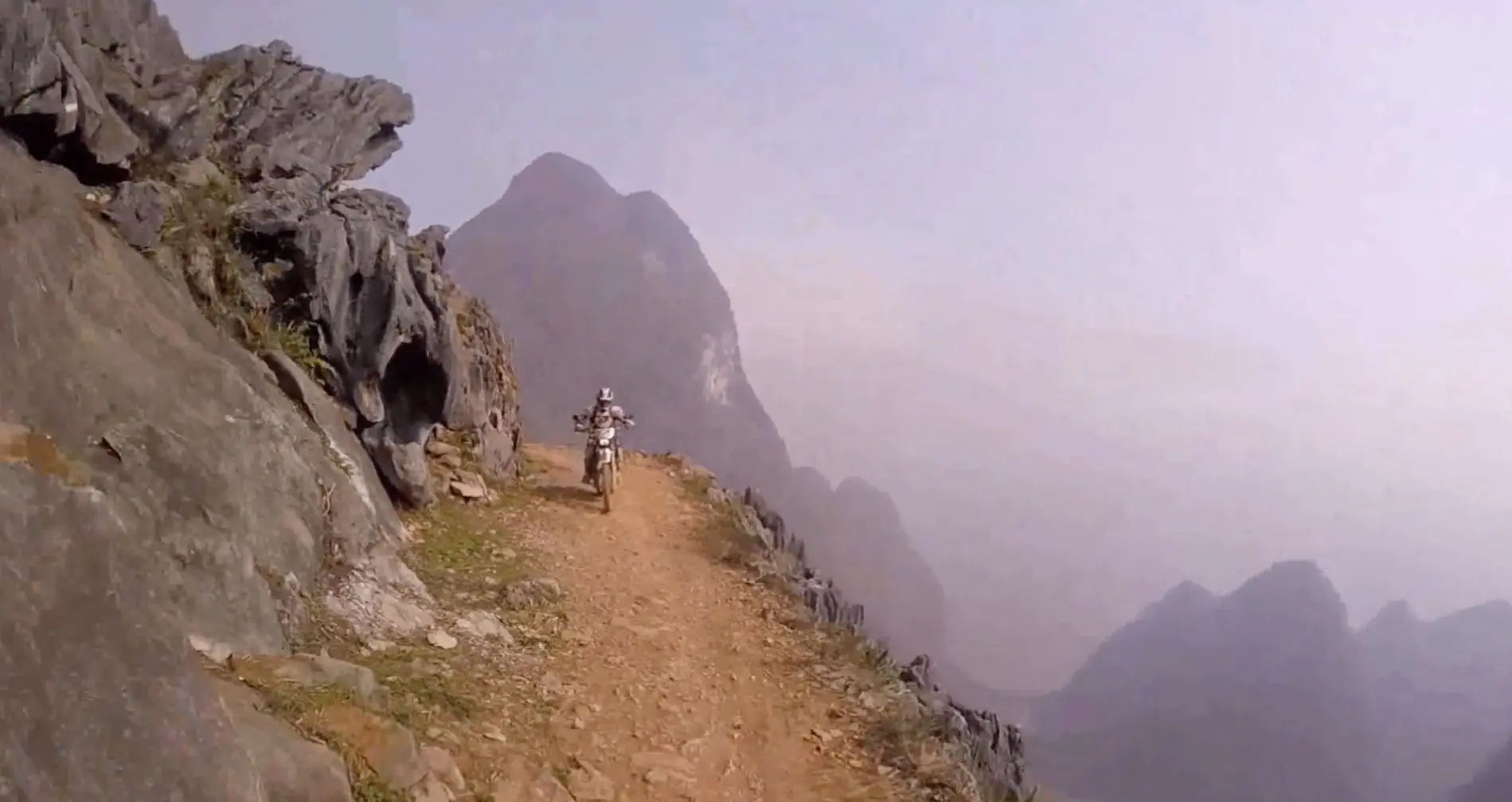
Many travelers ask: is the Ha Giang Loop dangerous? Steep mountain roads, sharp turns, unpredictable weather, and local truck traffic make that a fair question, especially for first-time motorbike riders. The short answer: yes, there are real risks. But with the right preparation, most riders complete the loop without incident and leave calling it the best trip of their lives. This guide covers the actual dangers, honest safety tips, and what to expect on the road in 2026.
- Check out Ha Giang Loop Motorbike Tours
Is the Ha Giang Loop dangerous? What riders need to know in 2026
The Ha Giang Loop takes three to five days to complete and covers some of the most dramatic mountain roads in Vietnam. You ride across high passes, through misty valleys, and into ethnic minority villages that see very little outside traffic. The roads have earned a reputation as one of the most dangerous in Vietnam, and that reputation is not entirely wrong. Sharp blind curves, sheer cliff drops, and sections with no guardrail demand focus from start to finish.
That said, thousands of riders complete the loop each year without serious incident. The risk level depends almost entirely on two things: your riding ability and how seriously you take road conditions. Riders who go slowly, check the weather, and choose the right bike rarely run into serious trouble. Riders who rent a scooter for the first time and push through fog are the ones who end up in reports.
On my first ride through the loop, I took a corner too fast above Dong Van and felt the rear tire slide on loose gravel. I stopped, steadied myself, and rode the next 20 kilometers at half speed. Nothing happened. That moment taught me more about Ha Giang safety than any blog post.


The real dangers on the Ha Giang Loop road
Poorly maintained roads
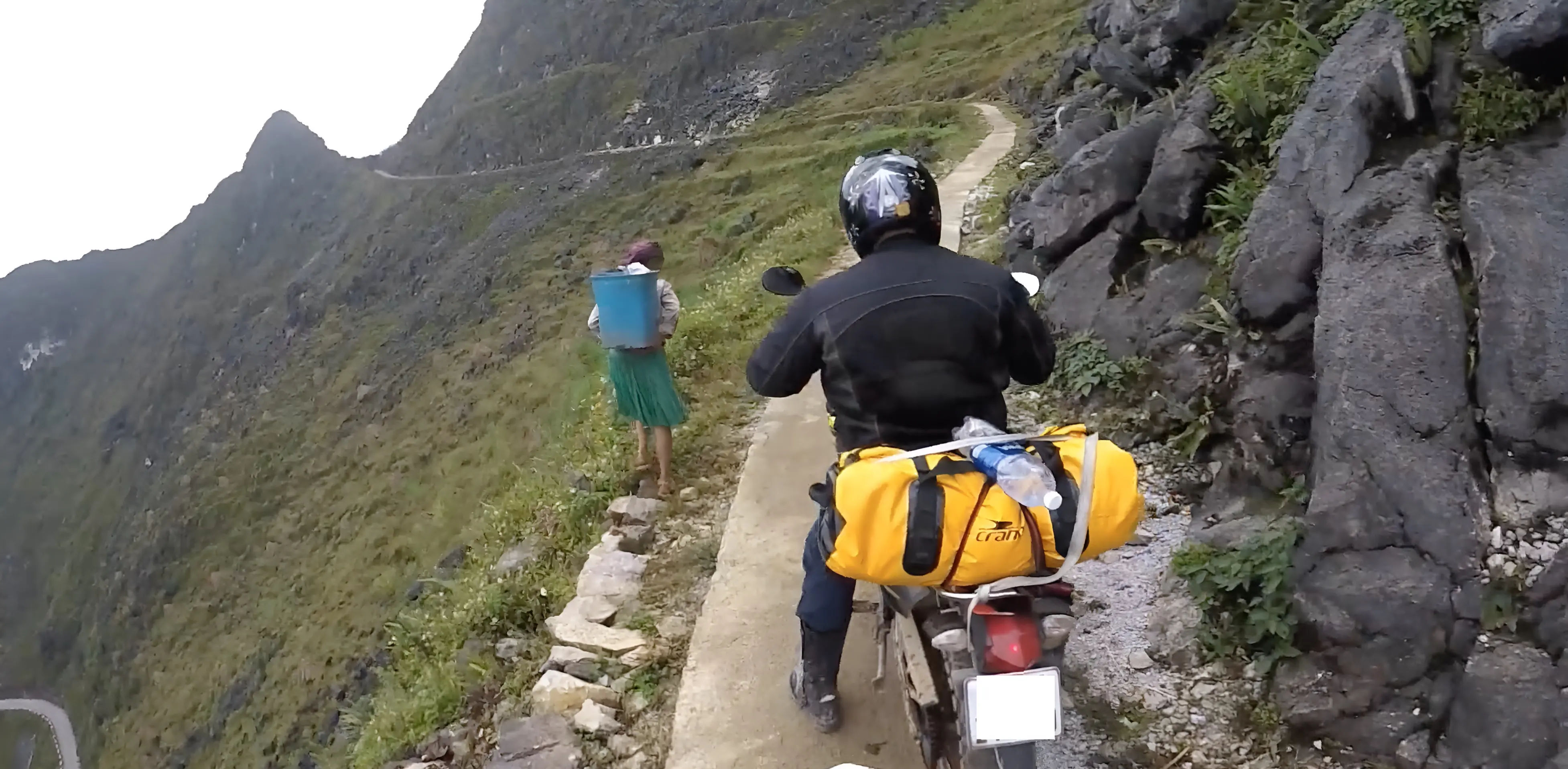
Some sections of the loop are rough: gravel patches, potholes, and tight curves above steep drops. These Ha Giang Loop road conditions change after rain and vary by season. Inexperienced riders often misjudge corners on descent, which is the most common cause of Ha Giang Loop accidents. Ride slow on the way down and use engine braking, not just the front brake.
Unpredictable weather
In the mountains, clear skies can shift to heavy rain or dense fog within 30 minutes. During the rainy season (June to August), roads get slick, visibility drops, and landslides can close sections without warning. Cold winds from December to February add another layer of difficulty on exposed passes. Check the forecast each morning before you leave your guesthouse.
Rockslides
Rockslides occur after strong rain, most often on the passes above Dong Van and between Meo Vac and Du Gia. They are not constant, but they are not rare either. Local guesthouse owners usually know which sections are blocked. Ask before you ride and listen when they tell you to wait.
No medical facilities on the road
Small clinics exist in Yen Minh, Dong Van, and Meo Vac, but serious injuries require reaching Ha Giang City, which can take two hours or more depending on where the accident happens. This is the clearest reason to ride conservatively. The road does not forgive mistakes the way a flat city street does.
Inexperienced riders
Most Ha Giang Loop accidents involve riders who had little or no motorbike experience before renting a bike. A 150cc manual motorbike on a mountain pass behaves very differently from a scooter in a city. If you have never ridden a manual bike, practice for at least a full day on flat roads before attempting the loop. Better still, ride with a local easy rider who drives while you sit behind.
Ha Giang Loop death rate: what the numbers actually show
Fatal accidents on the Ha Giang Loop happen, but they are rare relative to the number of riders on the road each year. Most Ha Giang Loop deaths involve one of three factors: riding at night, riding under the influence of alcohol, or losing control on a descent after overbraking. There is no official published Ha Giang Loop death rate from Vietnamese authorities, but local tour operators and guesthouses report that serious accidents cluster around the rainy season and the Ma Pi Leng Pass section above Meo Vac.
The risk is real, but it is also controllable. Riders who stop before dark, avoid alcohol on riding days, and descend slowly have an injury rate close to zero across thousands of completed loops.
Ha Giang Loop safety: how to ride smart
Pick the right season
September to November and March to May are the safest months. Roads are drier, visibility is clearer, and the passes are at their most stable. The rainy season from June to August brings the highest risk of Ha Giang Loop accidents due to wet roads and rockslides.
Choose the right bike
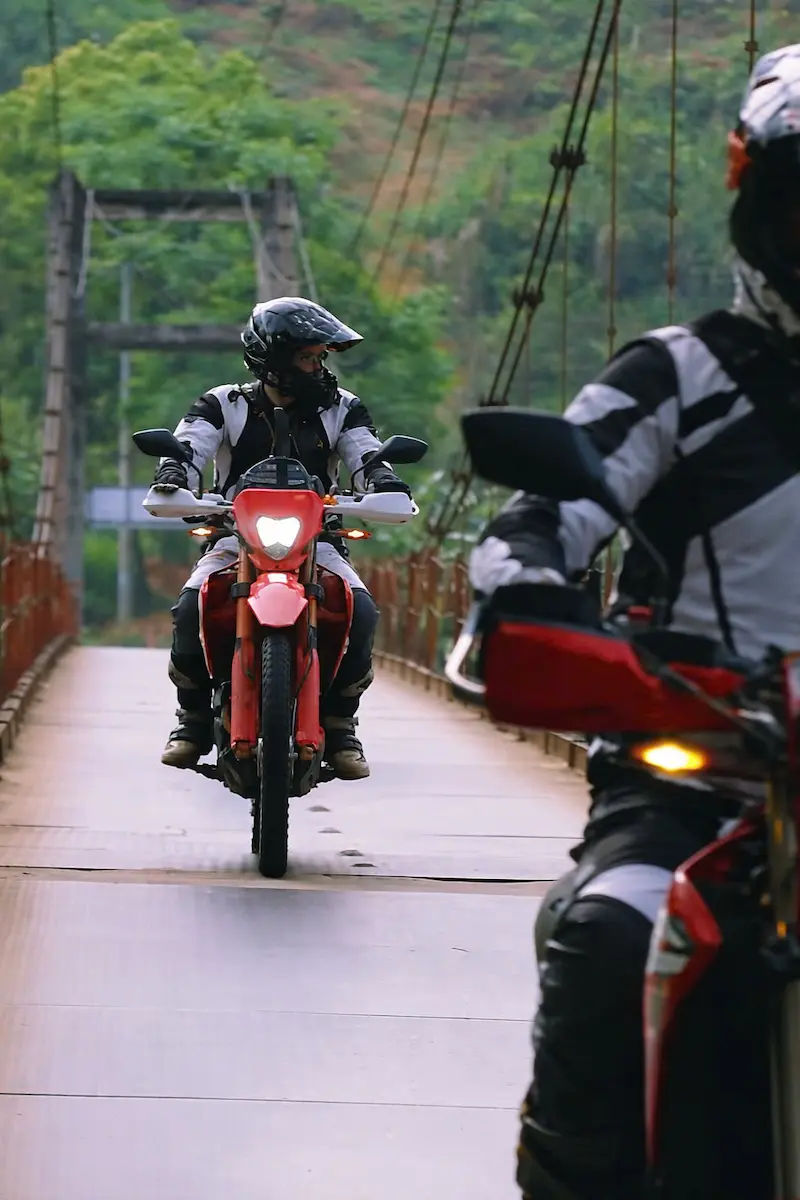
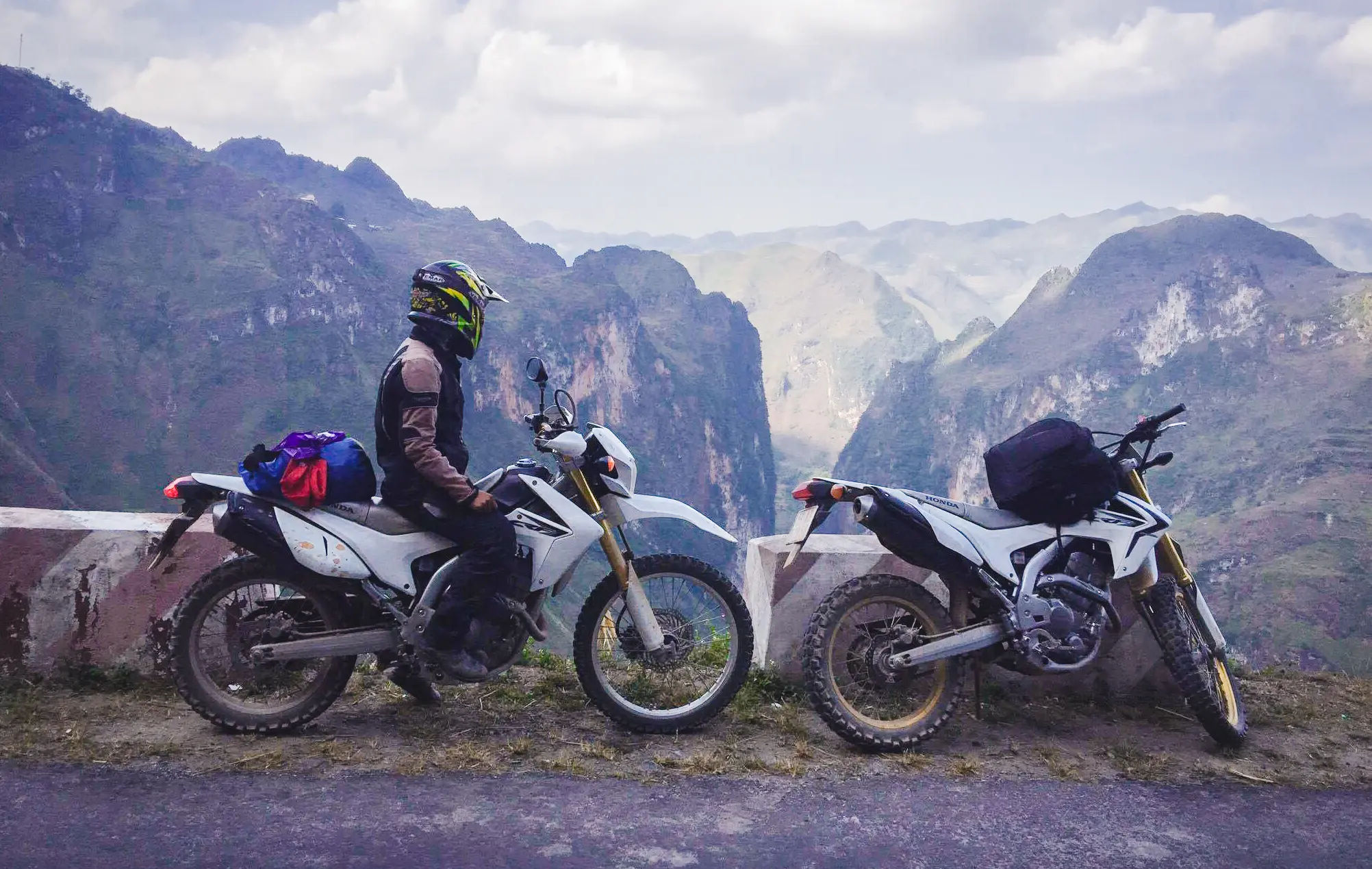
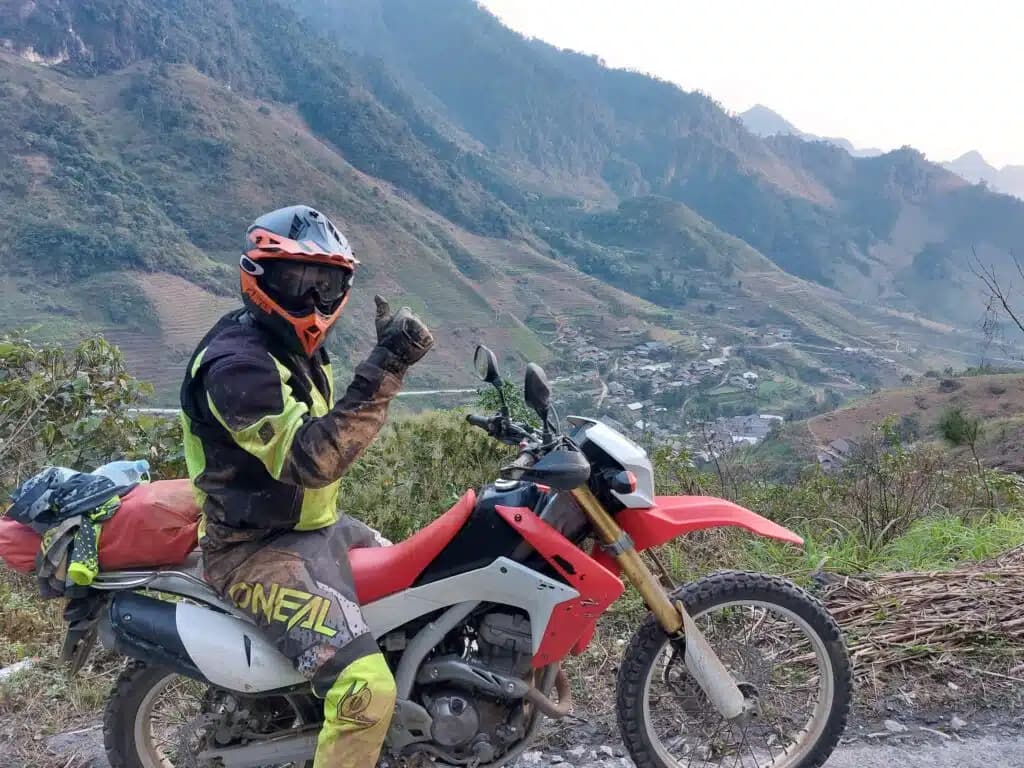
A manual bike, such as a Honda XR150, CRF150, or similar trail bike, handles the Ha Giang terrain far better than a scooter. Scooters have weaker brakes, less suspension travel, and smaller tires, all of which matter on gravel and descent. Before you leave Ha Giang City, check the brakes, tires, chain, and lights yourself. Do not assume a rental shop has done it.
Pack smart
Bring rain gear, gloves, warm layers for the high passes, and a basic first-aid kit. Carry water and snacks because some stretches between towns have no shops for 30 to 40 kilometers. A local SIM card, an offline map (Maps.me or Google Maps downloaded for offline use), and a power bank round out the essentials.
Follow the road rules
Ride slow on descents. Honk before blind corners. Never overtake on narrow sections. Wear a full helmet, not the thin shell rentals that come with most bikes. Respect local traffic: farm vehicles, cattle, and children appear on the road without warning, especially in the morning.
Plan your stops
Book accommodation in Dong Van and Meo Vac in advance, particularly during peak season in October. Know where fuel stops are: the longest gap between stations is roughly 60 kilometers between Meo Vac and Du Gia. Carry a small fuel bottle if you are unsure of your tank range. If you are not confident in your route-finding, hire a local guide. They know which roads are closed, where to eat, and how to talk to families in remote villages.
Real rider experiences on the Ha Giang Loop
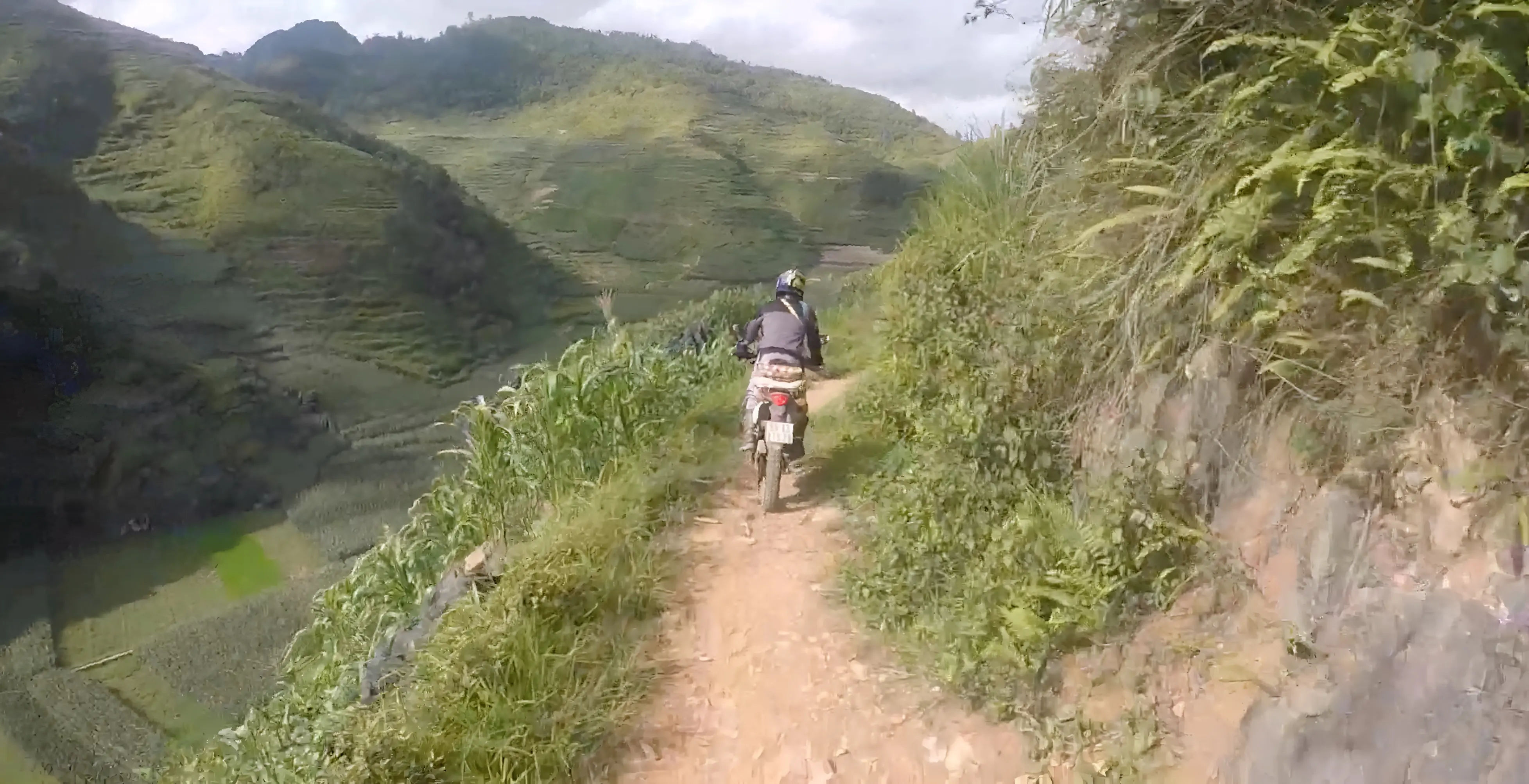
On my second ride through the loop, I joined a family: two parents and their teenage son. They had searched the Ha Giang Loop death rate before booking and were close to cancelling. They rode with a local easy rider guide instead of self-riding, and three days later they were drinking rice wine in Du Gia with a family they had just met. Their verdict at the end: the roads looked far worse online than they were in person, and the guide made the difference.
A German rider I met in Meo Vac had searched “Ha Giang Loop gefährlich” before coming. He rented a CRF150, took the loop over four days at a steady pace, and said the roads were intense but manageable once he committed to keeping his speed down on the passes. He had no falls and no close calls.
Suggested 4-day Ha Giang Loop itinerary
Most riders complete the loop in three to five days. Here is a balanced four-day plan that keeps daily distances manageable and leaves time to stop.
Day 1: Ha Giang City to Yen Minh
About 90 kilometers. Stop at Quan Ba Heaven Gate for the first views of the Dong Van Karst Plateau, then drop into Lung Tam Village to see traditional linen weaving by Hmong women. Overnight in Yen Minh at a local homestay. Expect a communal dinner, live music, and card games with other riders.
Day 2: Yen Minh to Meo Vac
Ride through Tham Ma Pass and into Dong Van before the day’s main challenge: Ma Pi Leng Pass. This 20-kilometer stretch above the Nho Que River is the section most often called the most dangerous road in Vietnam. It is also the most dramatic. Ride it in the morning when visibility is best. Overnight in Meo Vac.
Day 3: Meo Vac to Du Gia
Take a boat on the Nho Que River through Tu San Canyon, the deepest canyon in Southeast Asia at roughly 700 meters. The road to Du Gia is rougher than days one and two, with more gravel sections. Arrive by late afternoon. Du Gia Village is known for its waterfall and its guesthouse karaoke nights.
Day 4: Du Gia to Ha Giang City
Swim at Du Gia waterfall in the morning before the road gets warm. Pass through Little Ma Pi Leng Canyon on the way back. Arrive in Ha Giang City by mid-afternoon with enough time to return the bike, shower, and eat a proper meal.
FAQ: Ha Giang Loop safety and dangers
Is the Ha Giang Loop dangerous?
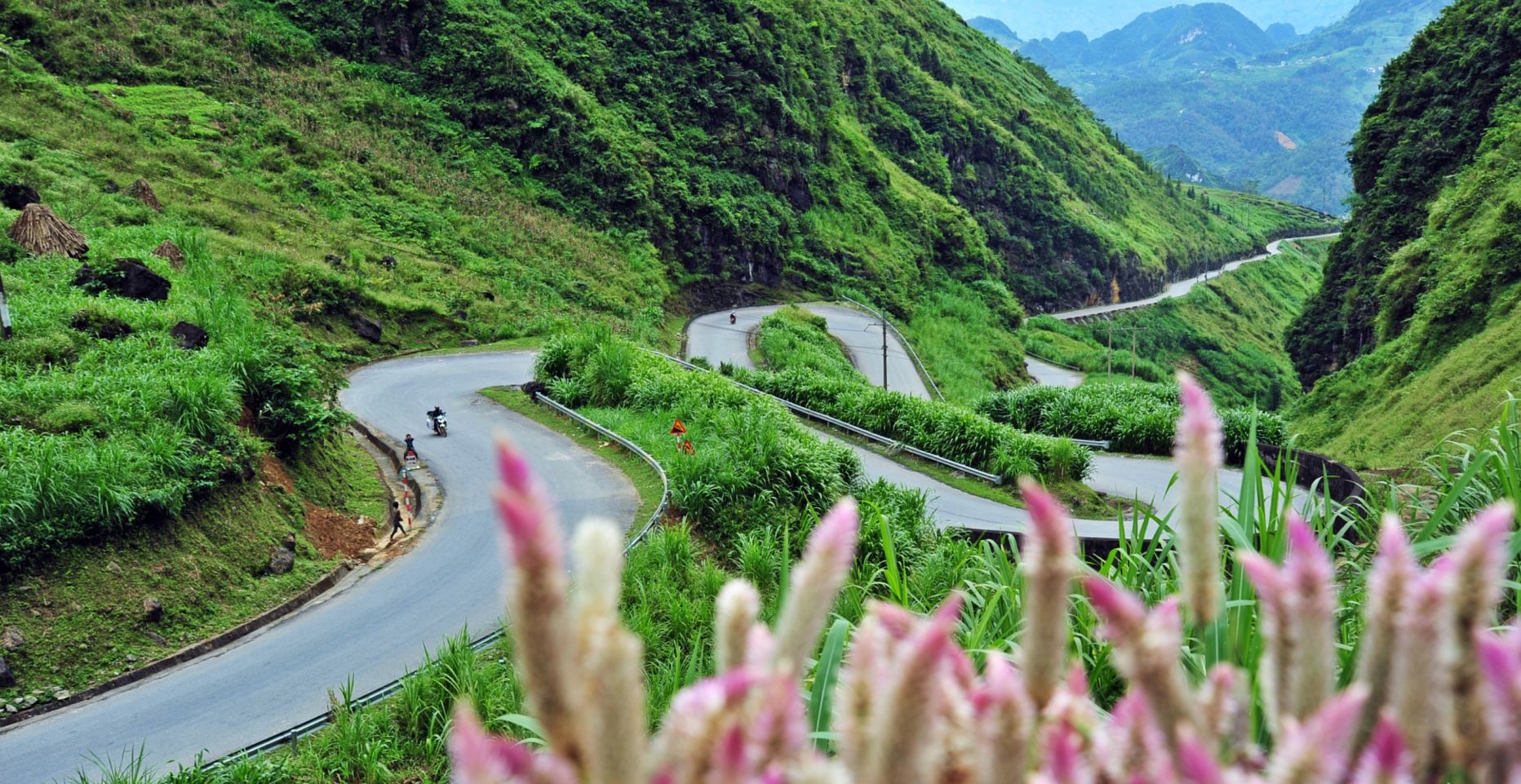
The Ha Giang Loop has real risks: sharp mountain curves, sheer drop-offs, unpredictable weather, and limited medical facilities. For riders with experience on manual bikes who go slowly and avoid night riding, the loop is challenging but manageable. For complete beginners, hiring a local easy rider driver is the safer option.
What is the Ha Giang Loop death rate?
No official figure is published by Vietnamese authorities. Local operators report that fatal accidents are rare and cluster around the rainy season and the Ma Pi Leng Pass section. Most Ha Giang Loop deaths involve night riding, alcohol, or loss of control on steep descents. Riders who follow basic safety rules rarely appear in those reports.
How are the Ha Giang Loop road conditions?
Roads are a mix of smooth asphalt and rough gravel, depending on the section and the season. Some sections near Meo Vac and Du Gia have no guardrails on cliff-side stretches. After rain, mud and loose rock can cover the road surface. Always reduce speed after rain and ask locals about conditions ahead before departing each morning.
What should I pack for the Ha Giang Loop?
Pack light. A 20-liter daypack is enough: two changes of clothes, a rain jacket, gloves, warm layer for the passes, swimwear, sunscreen, and a small first-aid kit. Leave heavy luggage at your guesthouse in Ha Giang City. Carry enough cash for four days as ATMs are not available past Dong Van.
Final thoughts on the Ha Giang Loop in 2026
The Ha Giang Loop is not a beginner road, but it is also not as deadly as the online conversation sometimes makes it sound. The riders who get into trouble are usually the ones who ignored the basics: wrong bike, wrong speed, wrong season, or riding after drinking. The riders who prepare well, go slowly, and stay off the road after dark finish the loop with a clear head and a long list of memories they will not find anywhere else in Vietnam.
If you are unsure about your riding ability, book a guide or an easy rider tour. You will see the same roads, the same passes, and the same villages, and you will get home safely. Check out our Motorbike tours of Vietnam
About the author: Ms. Thu is a Vietnamese traveler and writer who has ridden every major motorbike route in Vietnam. She writes about road conditions, safety, and local culture to help riders plan trips with accurate information rather than guesswork.